From Opposing Muivah to Embracing Him: Why June 18 No Longer Matters
A look at how June 18's anti-NSCN IM narrative evolved as political realities reshaped alliances in Manipur.
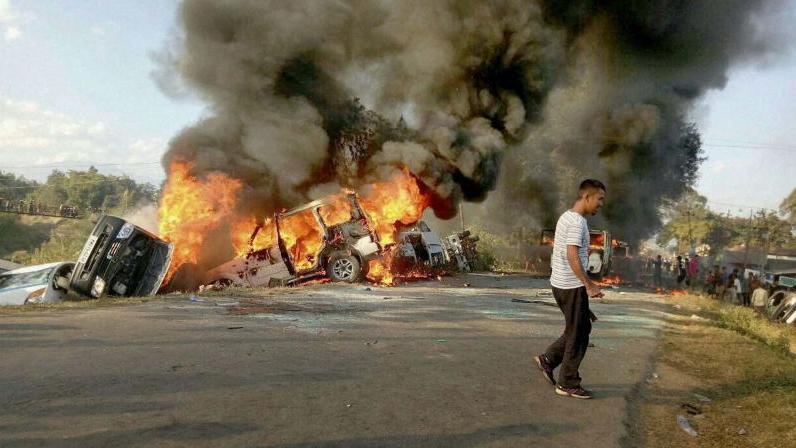
June 18 remains one of the most significant dates in Manipur's modern political history. It was the day Manipur defended its territorial integrity against the Tangkhul-led NSCN IM.
The day also commemorates the eighteen Meiteis who lost their lives during the mass agitation against the Government of India's decision to extend the NSCN-IM ceasefire "without territorial limits" in 2001. Many in Manipur feared that the agreement would compromise the state's territorial integrity and strengthen the Naga demand for Greater Nagalim.
Thousands took to the streets in protest. The agitation turned violent, security forces opened fire, and eighteen civilians were killed.
Public anger was so intense that the Government of India eventually withdrew the controversial "without territorial limits" clause. June 18 has since been remembered as a symbol of Manipur's collective resolve to defend its territorial integrity.
When Tangkhul-Led NSCN-IM Was Seen as Manipur's Greatest Threat
For years, the June 18 narrative was closely tied to opposition against the Tangkhul-led NSCN-IM and its leader, Thuingaleng Muivah.
The movement was portrayed as the principal threat to Manipur's territorial integrity. The political atmosphere was so hostile that even Muivah's proposed visit to his native village Somdal in 2010 triggered massive opposition across the state.
The message was clear: Manipur and the Tangkhul-led NSCN-IM stood on opposite sides of a political divide.
That was the reality June 18 represented.
May 3, 2023: The Conflict That Changed Political Equations
Everything began to change after May 3, 2023.
Following the ATSUM-led tribal solidarity rally, violence erupted between the Meitei and Kuki communities. Many believed the conflict would be short-lived and would decisively weaken Kuki resistance.
There was confidence that areas such as Kangpokpi, Saikul, New Keithelmanbi and Lamka could eventually be brought under effective Meitei dominance.
But events unfolded differently.
The conflict dragged on, Kuki resistance remained intact, and the anticipated outcome never materialized.
The Failure of the Meitei Strategy
Three years later, the reality on the ground tells a different story.
The Kukis were not defeated. The hills did not fall. The expectation of a quick and decisive victory proved unrealistic.
Instead of becoming more dependent on Imphal, the Kukis adapted to the new reality. Alternative supply chains emerged, local institutions strengthened, and communities learned to function without relying on the valley as they once did.
At the same time, the demand for Separate Administration gained momentum.
This created a political dilemma. Continuing the conflict risked strengthening demands for political separation. Ending the conflict meant acknowledging that the original objectives had not been achieved.
Why Former Enemies Became Political Partners—The Situationship
It was at this stage that old political contradictions appeared to lose their importance.
The same Tangkhuls and the same NSCN-IM that had once been presented as threats to Manipur's territorial integrity suddenly became useful allies.
The same Muivah whose entry was fiercely opposed in 2010 was welcomed in a manner that would have been unimaginable during the height of the June 18 movement.
History had not changed.
Political interests had.
The question is not why the Meiteis adjusted their strategy. Communities and political movements often act according to what they perceive as their interests.
The more important question is why sections of the Tangkhul leadership appeared willing to do the same.
The Tangkhul Push for a Wider Naga-Kuki Conflict
Violence that initially remained concentrated in Tangkhul-dominated areas of Ukhrul and Kamjong gradually took on a wider dimension.
Many Kukis believe that sections of the Tangkhul leadership sought to transform a localized conflict into a broader Naga-Kuki confrontation by invoking slogans of Naga unity and Naga brotherhood.
However, those calls did not generate the level of support expected from many non-Tangkhul Naga communities. Outside the immediate conflict areas, there appeared to be little enthusiasm for being drawn into a larger confrontation.
According to this interpretation, efforts then shifted toward creating conditions that would inevitably pull other Naga communities into the conflict.
The Killing of Three Kuki Pastors and the Breakdown of Trust
The killing of three Kuki pastors became a major turning point.
Among them was Dr. Rev. Vumthang Sitlhou, whose family represented a unique bridge between Kukis and the Zelianrong community. His father, Pakho Sitlhou, is remembered for translating the Bible into Rongmei and helping spread Christianity among the Rongmei people.
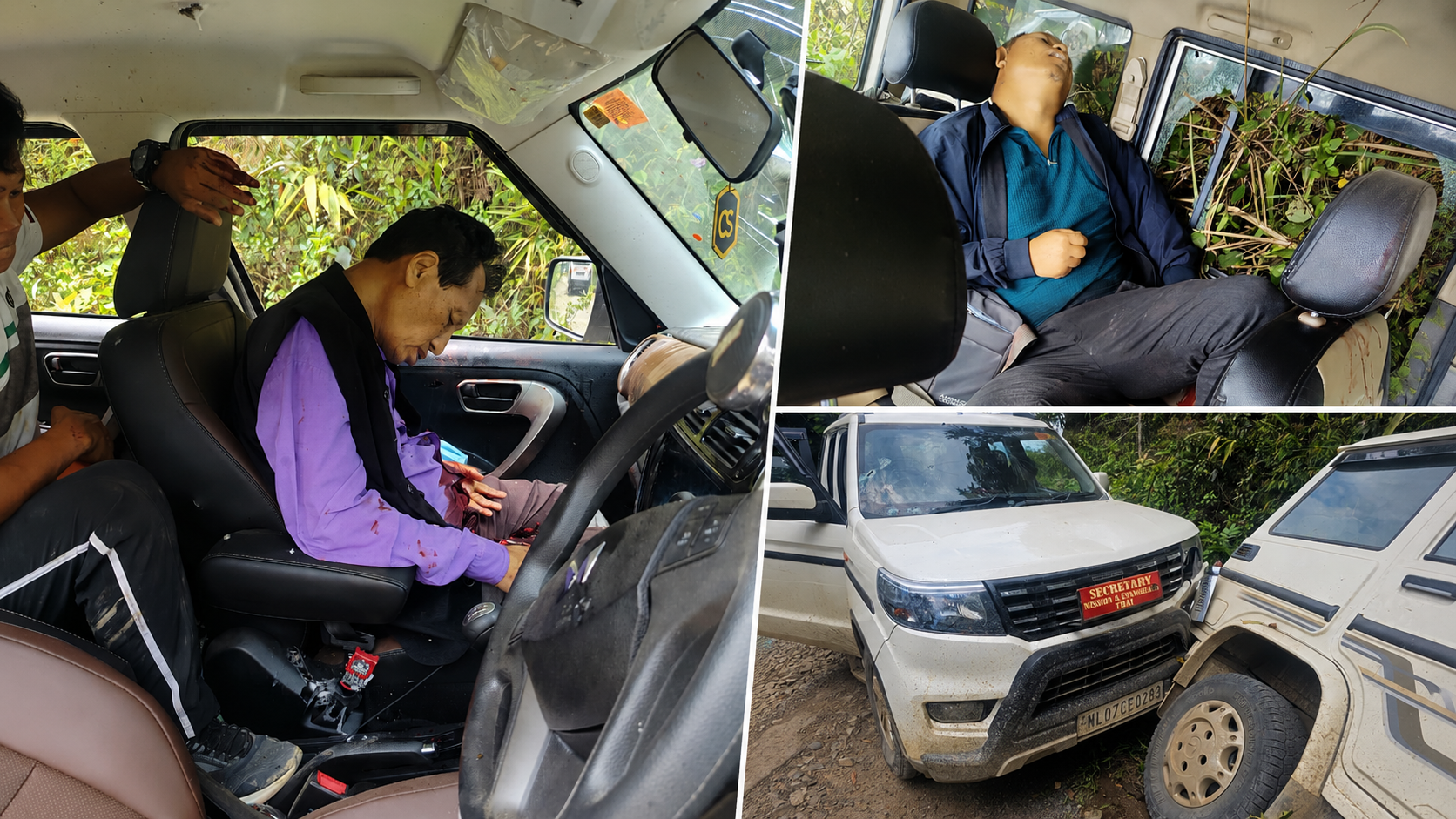
The killings occurred in areas where Kukis and Zelianrongs had lived together for generations.
For many Kukis, the consequences were devastating. Trust that had taken decades to build was damaged almost overnight. Rev. Sitlhou's death was seen not only as the loss of a religious leader but also as the destruction of an important link between two communities.
Whether by design or by consequence, the result was unmistakable: relations between Kukis and Zelianrongs deteriorated rapidly.
How the Conflict Spread Beyond Tangkhul Areas
Following the killings, tensions escalated through hostage incidents, retaliatory actions, and growing mistrust.
What had largely remained concentrated in Tangkhul areas of Ukhrul and Kamjong increasingly spread into non-Tangkhul Naga regions.
Communities that had previously remained outside the conflict found themselves drawn into it.
From the Kuki perspective, this achieved what earlier appeals to Naga unity and Naga brotherhood had failed to accomplish. A conflict that began in Tangkhul-dominated areas now involved a much wider section of the Naga population.
The question that remains unanswered is what the Tangkhuls ultimately hope to gain from this path.
How does confrontation with the Kukis advance the Naga cause?
How does it strengthen the demand for Greater Nagalim?
How does it help secure a separate political arrangement for the Nagas of Manipur?
These are questions that deserve honest answers.
A Missed Opportunity for Tribal Unity
The ATSUM rally of May 3, 2023 was not a Kuki rally.
It was a tribal rally.
At that moment, there existed the possibility of a broader tribal unity built around shared concerns and common political aspirations.
Had Naga organizations stood firmly alongside their fellow tribal and Christian communities, the political landscape today might have looked very different.
A united tribal front could have strengthened the case for a separate political arrangement for both the Kukis and the Nagas of Manipur.
Instead, tribal unity fractured and communities that could have been political partners became adversaries.
The Irony of June 18
This brings us back to June 18.
The eighteen who died in 2001 were told they were defending Manipur from the Naga political project represented by the Tangkhul-led NSCN-IM.
Twenty-five years later, those same political forces have become partners of convenience.
The very people who once mobilized against Muivah now embrace him.
The very movement that was once portrayed as a threat to Manipur's territorial integrity is no longer treated as such.
That is why June 18 no longer carries the same political meaning it once did.
Not because history has changed.
But because political convenience has rewritten old friendships, old enmities, and old narratives.
And that may be one of the greatest ironies in Manipur's modern political history.
The writer tweets at Gunlien
More in Opinion

Kuki-Zo Council Seeks Equal Justice, Political Solution
The Kuki-Zo Council urged the Centre to ensure equal justice, end humanitarian hardships, and expedite a political solution in Manipur.
Kuki Inpi Demands Republic TV Retract Khulmi Bridge Allegations
Kuki Inpi has condemned Republic TV's Khulmi Bridge report, demanding an immediate retraction over alleged misinformation and defamation against the Kuki-Zo community.
KIM Demands Accountability Over Thingkhongjang Attack
Kuki Inpi Manipur condemned the Thingkhongjang attack, demanding accountability, a judicial inquiry, and stronger protection for civilians in Kangpokpi District.
Kuki Inpi Demands Action Over Kuki Village Burnings
Kuki Inpi Manipur has demanded urgent government action over Kuki village burnings, citing repeated attacks and alleged security failures.
Kuki Inpi Demands Justice, Rejects Arambai Amnesty
Kuki Inpi demands prosecution of Arambai Tenggol members and withdrawal of remarks against further arrests.